

 Posted by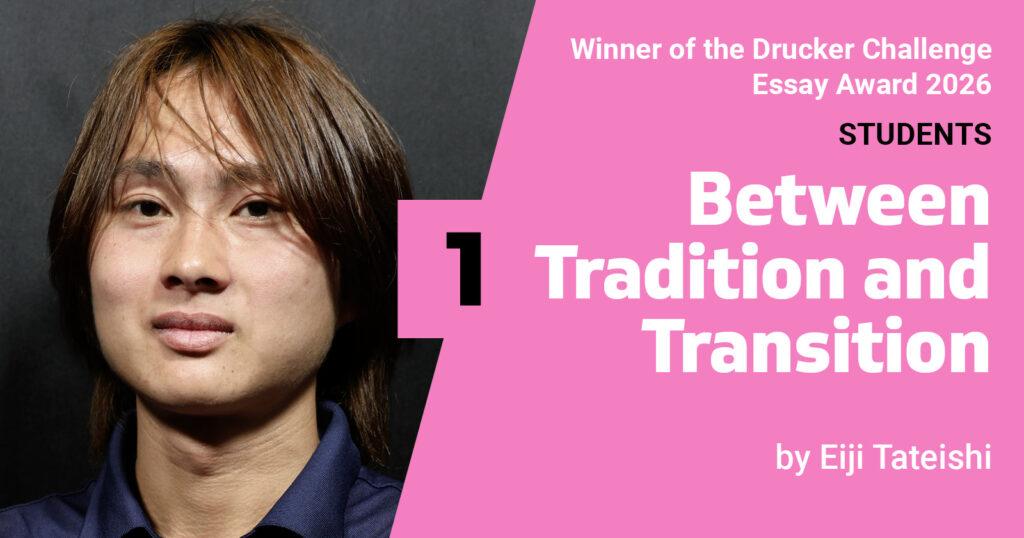
1. Welcome to Rusinga
The scorching sun radiated onto the shoulders sculpted by years of repetition, decades of the same motion, the same net, and the same lake, etched as taut lines of muscle. Beads of sweat glistened on their bodies as they pulled in unhurried but precise unison, like a well-oiled machine, while I, gushing with sweat, ground like a rusted gear that struggled to catch. I wiped my face with my shirt, and I glimpsed the women mending the nets near the shoreline, the waves reaching for the littered plastic bottles and cans. A boy who could not have been older than eight hauled fish into a cracked plastic basin, wheezing from a condition his family could not afford to have diagnosed.
Somewhere behind me laughter broke out, and out of the indiscernible conversation, the word mzungu. White person. I looked down at my hands, stained with blisters. I muttered, “Taipa warusugi,” or “time performance is terrible.” Jack Okongo, the Kenyan man pulling beside me, said something, and the others laughed harder, clearly amused that a foreigner was labouring alongside them. After a grueling four hours the net finally yielded two large fish and a handful of small ones. The boat owner took his share first, and the rest was split among forty hands. I asked Jack how much. He counted the catch, then held up his hand. Ten shillings. I did the math, about twelve yen for four hours of labour, not enough for a bottle of water in Tokyo. By every metric I knew, whether productivity, hourly wage, or return on effort, I was certain that this operation was a textbook case of inefficiency and an absence of innovation. I looked at my blisters, then at his calloused hands. I shook my head with disbelief. Jack laughed and replied, “Welcome to Rusinga.”
That night, the lake changed its face.
Hundreds of lights floated on the water, composing what they called the Ghost City, a name I found ironic given that Rusinga was five hours away from an actual city. Every boat carried a light that attracted insects, which in turn attracted the omena, leading to the fish swimming into the net. The initial investment in a single light eliminated the ongoing cost of wood, reduced active labour time, and increased yield. As we approached one of the boats, we woke up the fishermen who had been sleeping while waiting for the catch. After a brief exchange in Kiswahili they obliged to show us. One node of the Ghost City stirred to life, awoken from its slumber. The operations were precise as they gripped, pulled, and folded the net in one seamless sequence. It was refined tacit knowledge made explicit and taught as a shared practice. An endowment of a cycle of trial and error older than any management textbook on my shelf. The optimal timing for rounding up the net, the mesh size, the forecasting of torrential rain; none of these had evolved through board room meetings but on water. It had been passed between hands that looked like Jack’s, and not like mine.
They had already innovated within their own culture through a knowledge system built by the community itself. Drucker insisted that innovation is not a matter of invention but an economic and social act, the specific instrument of entrepreneurship. It is, in his words, “the act that endows resources with a new capacity to create wealth.” Nobody had taught them this definition, but they were already embodying it.
I had arrived thinking I knew what innovation looked like. By nightfall, the lake told me I did not.
2. The Inconvenience of Death
Kaleidoscopes of colour and sound whisk past me as I am pressed against the door, squirming to find space. On the 7:13 Toyoko Line, crammed with several hundred others, I gasp for air, with my five foot three height not helping at all. Salarymen, typical Japanese white-collar workers, surround me in identical suits, looking at their phones or at blank spaces, their eyes devoid of vitality.
A vibration from my phone snaps me back into reality, and I squeeze my hand into my pocket as I retrieve it, eager but uneasy for the results of my intern application. I am both disappointed and relieved that it is my mother. She laments about my brother’s hensachi, the deviation value that ranks every student against every other student in the country, and how he plays too much rugby. Rambling that other classmates have gone to prestigious universities, she complains about being ashamed around her fellow mothers, because the university name on the résumé is the status metric that matters the most in shūkatsu, or job hunting. Then she pivots to me. Have I been going to internships? Have I memorized the answers? Have I assembled my gakuchika, extracurriculars collected not out of passion but to fabricate lines on a CV which would look identical to ten thousand others? I reply yes to each one, each answer hoarser than the last. The little boy who aspired to be an astronaut had been degraded to this.
Suddenly, the train screeches to a halt in a tunnel. The conductor calmly explains that it was a “human-body incident,” the euphemism for someone who had jumped in front of a train, and apologizes thoroughly about the delay. The inconvenience of death leads to tongues clicking, with sighs and mutters spreading throughout the train, a collective expression of annoyance and irritation. I search for an alternative route and find out there will be a fifteen-minute delay. I will have to run to my interview. I sigh, and it is indistinguishable from everyone else’s. I catch my reflection on the window, the same dark suit, the same absent expression, the same tired eyes as everyone else. Eventually the train crawls forward, and the city scrolls past; convenience stores operating twenty-four-seven, pedestrians on pristine streets, towering offices reaching into the sky. Japan had succeeded spectacularly at everything. Everything except, what I would come to understand, Drucker advocated for.
The train finally slides into the station, and I am flushed out as people cascade onto the platform. Stern faces rush past me, eyes steady forward, nothing to think about but themselves. Stress was carved into their expressions, tasks looming over them. I am unmistakably one of them. I always was.
My first instinct on the shore of Lake Victoria “this is inefficient” had been a personal confession. I was the one on the rail, letting the train take me to a destination I had not chosen autonomously, but a destination everyone heads towards. I was on cultural autopilot, inertia propelling me forward.
3. Eighty Years Ago
In my university library, I am surrounded by millions of books and students clattering on their MacBooks, buried under assignments and internship applications. The Future of Industrial Man rests on my healed hands.
The laughter of the fishermen and the absent faces in Tokyo lodged in my memory make me realize that the standard excerpts introduced in class have not fully encompassed his vision.
He was not only writing about organizational management, but management as a means to keep us human.
Drucker had witnessed how societies collapsed in the 1930s when “the values, beliefs, and institutions of mercantile society [were] no longer capable of carrying this industrial system.” He diagnosed that “if the individual is not given social status and function,” they are reduced to “a mass of social atoms without aim or purpose,” which in turn leads to society collapsing. Drucker closed his argument by stating that “The necessity is upon us to build a free industrial society,” one that could give people status and function within the industrial system.
I look up from the book. Through the window, I see students hurriedly crossing the courtyard, earbuds in, eyes on phones. Walking towards seminars to earn credit, to get the university name on the résumé, to get a high-paying job. One types on his MacBook as he walks. Another wears a suit at nine in the morning. None of their eyes waver.
I close the book. Eighty years ago, Drucker had seen what I had seen.
4. Knowledge Workers in Form, Taylorist Parts in Substance
Japan, by any functional measure, is an industrial society. After the war, Japan saw unprecedented economic growth through industrialization and implemented lifetime employment and seniority wages, which Drucker praised. Efficient, disciplined, and productive, its knowledge workers by the millions built the world’s fourth-largest economy.
Yet, it has not achieved what Drucker insisted on.
Status is reduced to hensachi and a company name. Function is degraded to numbers on bank accounts.
Objectives are pre-loaded by a cultural autopilot so seamless that compliance feels like choice. The same cultural autopilot that produces trains which arrive within fifteen seconds of schedule subsequently produces twenty thousand suicides a year.
Nobody on the 7:13 Toyoko Line believes that they are enacting a Protestant theology by devoting themselves to modern capitalism’s values, and with the religious origin forgotten, the doctrine is secularized into efficiency, productivity, and meritocracy: values that seem inevitable in modern society. Knowledge workers manage themselves in a cage they did not choose or design autonomously, and sometimes, literally overwork themselves to death. In Japanese there is a term for this: karōshi. Drucker himself later admitted that the Japanese plant community was sustained less by belonging than by fear. Japan exists in a post-Druckerian future and experiences a Taylorist alienation; knowledge workers in form, Taylorist parts in substance. They live standardized lives, work as interchangeable parts, and measure worth in numbers. I had assumed that the only option was to study hard and raise my hensachi, enter a prestigious university, and join a traditional Japanese corporation. Or so I thought.
I had believed in a textbook arc, where Taylor reduced humans to standardized parts for efficiency, Mayo progressed his theory by adding that workers were social beings whose humane treatment enhanced productivity, and Drucker completed the restoration by arguing how management existed not to extract output but to give people status and function.
Ironically, seven thousand miles from Tokyo, the fishermen possessed what Tokyo direly lacked.
When Jack handed me a position pulling the net, he did not need my résumé or the name of my university. He conferred on me status and function inside their community, even though my soft mzungu hands were useless. They shared everything, including poverty, status, and function in their community. Although I had done nothing to earn it, my hands pulled alongside their hands. I pulled what forty hands had pulled for generations; hands layered as if they were living archives passed down from father to son. The simple fact that the men, women, and children occupied a recognized place in a shared world was enough to give them status. They were performing the function of visibly contributing to their community in order to live. Although they operated inside Taylorist structures, they were laughing, function and status supplied by their culture and community. None of them had heard of management by objectives, or self-governing plant communities, or any of the frameworks that followed. The “underdeveloped” community had developed the dignity, the status, and the function that the industrial society had been seeking for eighty years, through working together at the lake.
Of course, the community is not a paradise frozen in time. Jack and the other men worked brutally hard for a meager share. The patriarchy that limits what women can achieve, and the boy who is not in school, cannot be excused by the presence of cultural dignity. Material deprivation, adaptive preference, and lack of capabilities should not be romanticized.
However, neither can I definitively say that the technologically advanced “developed” country is well-off and that the “underdeveloped” country is not. Rather, the contradiction resides in the fact that dignity survives inside Kenya’s Taylorist conditions, and collapses inside Japan’s post-Druckerian society. Each society has one half of the free industrial society. Status and function are not necessarily produced mechanically, through the sophistication of management and the industrial society. Culture is an equally crucial variable, and a materially poor society has the possibility of preserving status and function better than a materially rich one. Culture defines expectations, aspirations, and values.
5. To Hand Over, To Pass Over
Nevertheless, Drucker had already identified these pre-industrial societies of shared labour, local knowledge, and mutual recognition as fragile, and unable to survive industrialism. In Rusinga, Jack once mentioned that he was uneasy about the Chinese investors buying up land along the shore to construct fish farms. Therefore, as the community faces development and industrialization, they too will probably trace the fate of Drucker’s mercantile world sooner or later.
On a different shore of the same lake, that future has seemed to arrive. Darwin’s Nightmare captures a different “innovation.” Foreign-owned factories complete with refrigeration, motorized industrial fishing vessels, and cargo planes were implemented. GDP rose, exports grew, and international institutions regarded it as successful development. After all, Drucker’s definition of innovation, the act that endows resources with a new capacity to create wealth, had been fulfilled. Nevertheless, the communities that had fished for generations dissolved, and the fishermen survived on rotting carcasses, unable to afford the fish they fished. The community, disposable for profit.
On the other hand, I saw hope in the Ghost City. The lake studded with lights was not merely a picturesque scene, but a sign that absorbing new tools without abandoning the people who hold them is possible. The light was foreign, but it was integrated into their refined practice, without foreclosing their children’s fishing. Culture set the boundary, and they developed innovation as their own. A light bulb in Tokyo is a light bulb. A light bulb in Rusinga becomes the Ghost City. Without destroying the culture, innovation was born from within.
The difference is between innovation that a community cultivates in its own soil, and innovation that treats that soil as ground to be cleared.
Originally the Latin innovare meant to renew from within. For most of history, it was synonymous with heresy, and only in the nineteenth century did the word acquire the meaning it carries today. Therefore, culture defines which meaning “innovation” takes the form of.
Culture also defines the boundary between tradition and transition. The etymology makes this apparent, with tradition meaning to hand over, and transition meaning to pass over. Tradition and transition are two sides of the same act of passing something from one hand to another.The fishermen in Rusinga achieved innovation through practicing tradition, while transitioning knowledge from one generation to another. Culture keeps innovation inside transition, allowing it to be handed over and renewed without ceasing to embrace the tradition. The Nile perch economy severed the ties between these three words, and fragmented them. Culture is what bonds them together.
6. The Glass
I judged the fishermen instinctively as inefficient, then began romanticizing them as a community embodying what modernity has lost. Both reactions were me running on cultural autopilot, mistaking it for autonomy.
Drucker stated that profit is not purpose but cost, and that one must be autonomous and manage oneself. If one of the most efficient, technologically advanced, and widely admired countries in Asia lacks status and function, then perhaps the true idealism is not in questioning efficiency, but in believing that efficiency alone will make us human. As he refuted business ethics as an explicit override of moral agency, the cultural autopilot is an implicit pre-loading of desire.
With the same lake and the same tools, one sees innovation and the other sees inefficiency. The fisherman would see the light as innovation, and would not consider the trawler, because in his autopilot, efficiency is not weighed against the livelihood of his community, even though efficiency has the potential of eventually solving material deprivation. The Japanese investor would see inefficiency in the lights, and a problem to solve. He would not consider what the lights preserved, because in his autopilot, community is not a variable to be weighed against profit and efficiency. He would see the trawler as a tool to stimulate the economy, which in turn would lead to “development” and enhance well-being. Each is acting on the predetermined values of their cultural autopilot.
As Drucker warned, the danger in turbulence is not the turbulence itself, but acting with yesterday’s logic. The logic that efficiency equals progress, that GDP measures well-being, that meritocracy is justice. That logic needs to be reexamined, in a world where knowledge workers are increasingly replaceable by AI.
Back in Tokyo, I am on the 7:13 Toyoko Line as usual. The same train, the same people, the same view. I am still on the rail, letting inertia take me to the same destination. I do not have the courage to step off, cancel my internships, and quit university.
However, I look out the glass window, and I see it for what it is. It used to be transparent, but now it has a tint of blue or green depending on the eye. I cannot remove it. But neither can I unsee it.
I touch the glass with the same soft mzungu hands. I will never have those layered hands of Jack’s. I can never be him. But I think that my hands have at least added one layer. Something no credential on my résumé can achieve. Something nineteen years of living on autopilot could not have provided. Something provided by blisters, by a functioning community, by a functional society, and most of all, by a book resting on my healed hands. I do not know where this train is going. But for the first time in my life, I want to know. To pass over, hand to hand.
Bibliography
Darwin’s Nightmare. Directed by Hubert Sauper. Mille et Une Productions / Coop99, 2004.
Drucker, Peter F. The Future of Industrial Man. Virginia Quarterly Review 18, no. 2 (Spring 1942): 161–199.
Drucker, Peter F. Innovation and Entrepreneurship. New York: Harper & Row, 1985.
Drucker, Peter F. Post-Capitalist Society. Oxford: Butterworth-Heinemann, 1993.
Godin, Benoît. Innovation Contested: The Idea of Innovation Over the Centuries. New York: Routledge, 2015.
International Monetary Fund. Japan. World Economic Outlook Database, October 2025.
https://www.imf.org/external/datamapper/profile/JPN
Japan Ministry of Health, Labour and Welfare. Suicide Statistics 2024. Tokyo: Ministry of Health, Labour and Welfare, 2025.
Oxford English Dictionary. “tradition, n.” Accessed April 2026.
https://www.oed.com/dictionary/tradition_n?tab=etymology#17870898
Oxford English Dictionary. “transition, n.” Accessed April 2026.
https://www.oed.com/dictionary/transition_n?tab=etymology#17951425
Weber, Max. The Protestant Ethic and the Spirit of Capitalism. Translated by Talcott Parsons. London: George Allen & Unwin, 1930.
About the author:
Eiji Tateishi is a second-year undergraduate at Keio University (Faculty of Environment and Information Studies), studying international management under the Kotosaka Seminar and social sector research under the Miyagaki Seminar.
Having lived in Japan, the United States, Spain, and Kenya, he brings a cross-cultural perspective to his work, most recently through approximately forty days of NPO fieldwork in Kenya.
He plays ultimate frisbee, serves as Finance Director of AIESEC SFC, and participates in the Identity, Community, and Polarization roundtable of the 78th Japan-America Student Conference.
A former IIBC Essay Contest laureate, Eiji hopes to pursue thesis research on multinational corporations and their relationships with host states in emerging African markets, as well as on social enterprises.